Uncategorized
Economic Nexus for Sales Tax After Wayfair: State Thresholds, Registration, Compliance

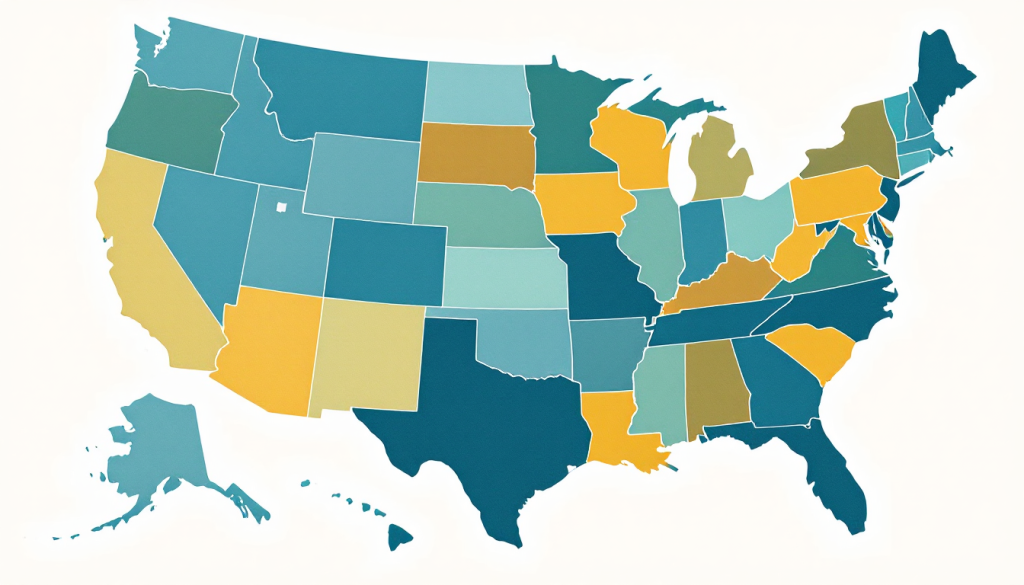
Economic nexus for sales tax is the rule that a business can owe sales tax collection duties in a state where it has no physical presence at all, based purely on its sales volume into that state. The Supreme Court created this world in 2018 when it decided South Dakota v. Wayfair and overturned the decades-old physical-presence requirement. Every remote seller now has to track thresholds in all 45 sales-tax states.
Key takeaways
- South Dakota v. Wayfair, 138 S. Ct. 2080 (2018), overruled Quill Corp. v. North Dakota and held that a state may require an out-of-state seller to collect sales tax based on economic activity alone, with no physical presence required.
- The most common economic nexus threshold is $100,000 in sales or 200 separate transactions in the state, the model South Dakota’s law used, though many states have since dropped the 200-transaction test and a few set the dollar threshold at $250,000 or $500,000.
- Marketplace facilitator laws shift the collection duty to platforms such as Amazon, Etsy, and Walmart, so marketplace sales are generally collected by the platform but may still count toward a seller’s own nexus threshold in some states.
- Taxability of software as a service varies dramatically by state: some tax SaaS as a taxable service or tangible property, others exempt it, and the answer turns on each state’s own statute and rulings.
- Once a threshold is crossed, the seller must register, collect, file, and remit, often within 30 to 60 days, and failure to do so creates personal exposure for uncollected tax plus penalties and interest under each state’s revenue code.
What is economic nexus for sales tax?
Nexus is the connection between a business and a state that is sufficient, under the Constitution, for the state to impose a tax collection obligation. For most of modern history that connection had to be physical: a store, an office, an employee, inventory, or property in the state. Economic nexus replaces that physical test with an economic one. A seller that ships enough goods or services into a state, or completes enough transactions there, has nexus even if it never sets foot in the state.
The legal turning point was South Dakota v. Wayfair in June 2018. South Dakota had passed a law requiring remote sellers with more than $100,000 of sales or 200 or more transactions into the state to collect and remit sales tax. That law directly challenged the Supreme Court’s 1992 decision in Quill Corp. v. North Dakota, which had held that a seller needed a physical presence before a state could compel collection. In Wayfair, the Court overruled Quill, calling the physical-presence rule unsound and an inducement to tax avoidance. It found South Dakota’s thresholds a reasonable proxy for a substantial nexus with the state.
Within roughly eighteen months of the decision, nearly every state with a sales tax had enacted its own economic nexus statute, most of them tracking the $100,000 or 200-transaction model the Court had implicitly approved. Forty-five states and the District of Columbia impose a general sales tax; only Alaska (which has local-level sales taxes but no statewide tax), Delaware, Montana, New Hampshire, and Oregon do not.
Who is affected and who must comply
Economic nexus reaches any business that sells into states where it lacks a physical footprint. That sweeps in a far wider group than the pre-Wayfair world did:
- E-commerce sellers shipping physical goods nationwide.
- Software and SaaS companies selling subscriptions across state lines.
- Wholesalers and manufacturers whose sales include any taxable retail component.
- Service providers in industries where the service is taxable in the destination state.
- Marketplace sellers, even where the platform collects, because their gross sales may still count toward thresholds.
The obligation arises state by state. A company with $5 million of nationwide revenue may have crossed the threshold in fifteen states and not in twenty others, and it must monitor each one independently. The compliance burden is not the tax itself, which is borne by the customer, but the duty to register, collect the correct rate (state plus local), file returns on each state’s schedule, and remit on time. A seller that crosses a threshold and fails to register becomes personally liable for the tax it should have collected but did not, because the customer is rarely pursued.
The trigger is usually measured on a rolling or prior-calendar-year basis, and the measurement period differs by state. Some states look at the prior calendar year, some at the current or prior twelve months, and the definition of which sales count (gross, retail-only, or taxable-only) also varies. Companies that recognize revenue under accrual accounting should reconcile their sales-tax measurement to actual delivered sales rather than booked revenue; see our discussion of cash vs accrual accounting for why the two figures can diverge, and our guide to ASC 606 revenue recognition for how booked revenue is determined.
Physical presence has not disappeared as a nexus trigger; economic nexus is layered on top of it. A seller still establishes nexus the old way if it has inventory in a state (including inventory stored in a fulfillment-center warehouse by a marketplace), an employee or contractor working there, an office, or property. For many e-commerce sellers, third-party fulfillment inventory created physical nexus in multiple states years before they ever crossed an economic threshold. A complete nexus review therefore has to test both the physical-presence facts and the economic thresholds, because either one alone is sufficient to create a collection duty.
Past exposure is its own compliance problem. A seller that discovers it crossed a threshold two or three years ago, and never registered, has accrued a back tax liability for every sale it failed to collect on since the crossing date, plus penalties and interest. Many states offer a voluntary disclosure agreement that limits the lookback period (commonly three to four years) and waives some penalties in exchange for coming forward before the state finds the seller first. Quantifying that historical exposure, and deciding whether to file voluntarily, is often the first step a seller takes once it realizes its nexus footprint is larger than it assumed.
How economic nexus works (mechanics)
Compliance under economic nexus follows a repeatable sequence in every state.
Step one, monitor the thresholds. The seller tracks sales and, where relevant, transaction counts into each state against that state’s threshold. Most states use $100,000 in sales, 200 transactions, or either of the two. A growing number have repealed the 200-transaction prong because it captured small-dollar, high-volume sellers unfairly; states that have dropped it include California, Colorado, and Wisconsin, among others. A handful set higher dollar bars, such as $250,000 or $500,000.
Step two, identify the crossing date. When a threshold is met, nexus is established. Most states require the seller to begin collecting prospectively, often by the first day of the next month or within 30 to 60 days. The exact start date is statutory.
Step three, register. The seller registers for a sales tax permit with the state’s department of revenue before collecting. Collecting tax without a permit is itself a violation. The Streamlined Sales Tax registration system covers a subset of states through a single portal.
Step four, collect at the correct rate. Sales tax is generally destination-based, meaning the rate is the combined state and local rate at the customer’s location. The United States has more than 12,000 sales tax jurisdictions when local rates are counted, which is why most multistate sellers use tax-engine software to compute rates.
Step five, file and remit. The seller files returns on each state’s assigned frequency (monthly, quarterly, or annually based on volume) and remits the tax. A return is required even for a zero-tax period once the seller is registered.
State threshold comparison
The table below shows representative economic nexus thresholds for several states as of early 2026. Thresholds and measurement periods change, so the current statute and department-of-revenue guidance for each state govern.
| State | Sales threshold | Transaction threshold | Measurement period | Note |
|---|---|---|---|---|
| South Dakota | $100,000 | None (repealed 2023) | Current or prior calendar year | The Wayfair state; dropped the 200-transaction test in 2023 |
| California | $500,000 | None | Current or preceding calendar year | Highest common dollar threshold; no transaction count |
| Texas | $500,000 | None | Preceding 12 months | Total Texas revenue from all sales |
| New York | $500,000 and 100 sales | 100 transactions (with dollar test) | Preceding four quarters | Requires both the dollar and transaction tests |
| Illinois | $100,000 | 200 transactions | Preceding 12 months | Retains the 200-transaction prong |
| Florida | $100,000 | None | Prior calendar year | No transaction count; taxable sales only |
Two patterns stand out. First, the 200-transaction test is in retreat. It produced absurd results, such as a seller of $15 items triggering nexus on $3,000 of sales because it exceeded 200 orders, and many states have repealed it. Second, the measurement period and the type of sales counted are not uniform. New York is notable for requiring both a $500,000 sales figure and 100 transactions, a conjunctive test that protects very small sellers. A multistate seller cannot apply one state’s rule to another.
Worked example
Assume an online retailer based in Oregon (a no-sales-tax state) that sells handmade goods nationwide. In the prior calendar year it had the following sales into three states: California, $620,000 across 9,000 orders; Illinois, $80,000 across 240 orders; and Florida, $130,000 across 150 orders.
California. The threshold is $500,000 with no transaction count. The retailer’s $620,000 exceeds it, so it has economic nexus. It must register with the California Department of Tax and Fee Administration, collect the destination rate (the statewide base plus the applicable district taxes at each buyer’s address), and file on its assigned frequency. The transaction count is irrelevant in California.
Illinois. The threshold is $100,000 in sales or 200 transactions. The retailer’s $80,000 is under the dollar bar, and 240 orders exceeds the 200-transaction prong. Because Illinois uses an either/or test, crossing the transaction count alone establishes nexus. The retailer must register and collect in Illinois despite being under $100,000 in dollars.
Florida. The threshold is $100,000 in taxable sales, with no transaction count. The retailer’s $130,000 exceeds it, so it has nexus and must register and collect. Its 150 orders do not matter because Florida has no transaction prong.
The lesson is that the same seller crosses three different tests three different ways. Illinois nexus is triggered by transaction volume on a small dollar base, while California and Florida turn purely on dollars. A seller that tracked only dollar thresholds would have missed Illinois entirely and accrued uncollected-tax liability there.
Recent changes (2025 to 2026 law changes)
The most consistent trend through 2025 and into 2026 is the continued repeal of the 200-transaction threshold. After South Dakota itself dropped the transaction prong effective July 1, 2023, additional states followed, leaving the dollar-only test as the emerging norm. The policy rationale is that a transaction count penalizes high-volume, low-price sellers without any meaningful relationship to the burden their sales place on a state. The list of states retaining the transaction prong continues to shrink, so sellers should re-verify each state’s current rule rather than rely on older nexus matrices.
Marketplace facilitator rules have also matured. All states with a sales tax now have marketplace facilitator statutes that require the platform, not the individual seller, to collect on facilitated sales. The remaining complexity is whether a seller’s marketplace sales count toward its own economic nexus threshold for its direct (non-marketplace) sales. Several states include marketplace sales in the threshold calculation even though the platform collects the tax, which can pull a seller over the line for its own website sales. The answer is state-specific.
SaaS and digital-goods taxability remains the least settled area. There is no national rule. Some states tax SaaS as a taxable computer or data-processing service, some treat it as tangible personal property delivered electronically, and others exempt it. Practitioners watched several states issue or revise rulings on digital products and SaaS during 2025, and the only reliable approach is to confirm the destination state’s current treatment for the specific product before assuming it is exempt. The complexity deepens for bundled offerings: when a single subscription combines taxable software, exempt professional services, and digital content, the destination state’s bundling rules determine whether the entire charge is taxable or whether the components can be separately stated and taxed individually.
Enforcement has also tightened. In the years since Wayfair, state revenue departments built data-matching capabilities that compare marketplace-reported sales, payment-processor data, and registration records to identify remote sellers that should be collecting but are not. The states have a strong revenue incentive to pursue remote sellers, because the population of out-of-state businesses with nexus is large and the per-seller audit yield can be high. A seller that has crossed thresholds in many states and registered in none is increasingly likely to receive a nexus questionnaire rather than to slip through unnoticed, which is why a periodic, documented nexus study has become standard practice for any multistate seller of meaningful size.
Common pitfalls
- Tracking only dollar thresholds and ignoring transaction counts. In states that retain the 200-transaction prong (Illinois retains it under 35 ILCS 105/2), a high-volume seller can establish nexus well below $100,000 in sales.
- Assuming marketplace sales create no obligation. Even where the platform collects, several states count marketplace sales toward the seller’s own economic nexus threshold for its direct sales, a point grounded in each state’s marketplace facilitator statute.
- Treating SaaS as automatically exempt. SaaS is taxable in a number of states. Failing to confirm the destination state’s treatment (for example, taxing computer services under the relevant state administrative code) creates uncollected-tax exposure.
- Collecting tax before registering. Collecting sales tax without a valid permit is a violation in most states and can itself trigger penalties under the state revenue code, separate from any registration failure.
- Using the origin rate instead of the destination rate. Most states are destination-based; charging the seller’s home rate rather than the buyer’s combined state and local rate understates or overstates the tax and produces filing discrepancies.
- Missing the prospective start date. Nexus, once triggered, requires collection beginning on a statutory date, often the first of the following month. Late registration leaves a gap of uncollected tax for which the seller is personally liable.
- Ignoring local jurisdictions. The United States has more than 12,000 taxing jurisdictions. A state-only rate misses the city, county, and special-district taxes that the seller is obligated to collect at the buyer’s address.
Frequently asked questions
- What did South Dakota v. Wayfair actually change?
- It overruled the physical-presence requirement of Quill Corp. v. North Dakota and held that a state may require an out-of-state seller to collect sales tax based on economic activity alone. After Wayfair (2018), economic nexus replaced physical presence as the trigger for collection duties.
- What is the most common economic nexus threshold?
- $100,000 in sales or 200 separate transactions in a state, the model South Dakota’s law used and the Court reviewed. Many states have since repealed the 200-transaction prong, and a few set the dollar threshold at $250,000 or $500,000.
- Do marketplace sales through Amazon count toward my threshold?
- It depends on the state. The platform collects the tax on facilitated sales under marketplace facilitator laws, but several states still include those marketplace sales when measuring whether you have crossed the economic nexus threshold for your own direct sales.
- Is SaaS subject to sales tax?
- It varies widely. Some states tax SaaS as a taxable service or as electronically delivered property, and others exempt it. There is no national rule, so the destination state’s current statute and rulings control.
- How quickly must I register after crossing a threshold?
- Most states require collection to begin prospectively, often by the first day of the next month or within 30 to 60 days. The exact start date is set by each state’s statute.
- Which states have no sales tax?
- Delaware, Montana, New Hampshire, and Oregon have no general sales tax. Alaska has no statewide tax but allows local sales taxes. The other 45 states and the District of Columbia impose a general sales tax.
- What happens if I do not collect after establishing nexus?
- The seller generally becomes personally liable for the tax it should have collected, plus penalties and interest, because states rarely pursue the individual customer. Liability accrues from the date nexus was established.
- Does the transaction count include exempt or wholesale sales?
- It depends on the state’s definition of which sales count. Some states measure gross sales, some retail sales, and some taxable sales only. The same applies to the dollar threshold, so the state’s definition must be checked.
Bottom line
After Wayfair, any business selling into a state can owe sales tax collection duties without ever setting foot there, and the thresholds, transaction tests, and taxability rules differ in all 45 sales-tax states. The compliance discipline is to monitor each state’s threshold separately, register promptly on crossing, and confirm product taxability before assuming an exemption, because uncollected tax becomes the seller’s personal liability.
Sources and methodology
Primary sources: South Dakota v. Wayfair, Inc., 138 S. Ct. 2080 (2018) (overruling the physical-presence rule); Quill Corp. v. North Dakota, 504 U.S. 298 (1992) (the overruled prior rule); South Dakota S.B. 106 (the law upheld in Wayfair, $100,000 / 200-transaction thresholds, transaction prong repealed effective July 1, 2023). State authorities: California Rev. & Tax. Code §6203 and CDTFA guidance ($500,000 threshold); Texas Tax Code and Comptroller Rule 3.286 ($500,000 threshold); New York Tax Law §1101(b)(8) ($500,000 and 100 transactions); 35 ILCS 105/2 (Illinois $100,000 or 200 transactions); Florida statutes and Department of Revenue guidance ($100,000). Marketplace facilitator obligations and SaaS taxability are governed by each state’s statutes, administrative codes, and revenue-department rulings, which change frequently; the current authority for the specific state and product controls. Jurisdiction counts reflect commonly cited figures of more than 12,000 U.S. sales tax jurisdictions. For further reading see our learn library and regulatory desk.