Uncategorized
Pass-Through Entity Tax (PTET) Election: The SALT Cap Workaround, State-by-State Status

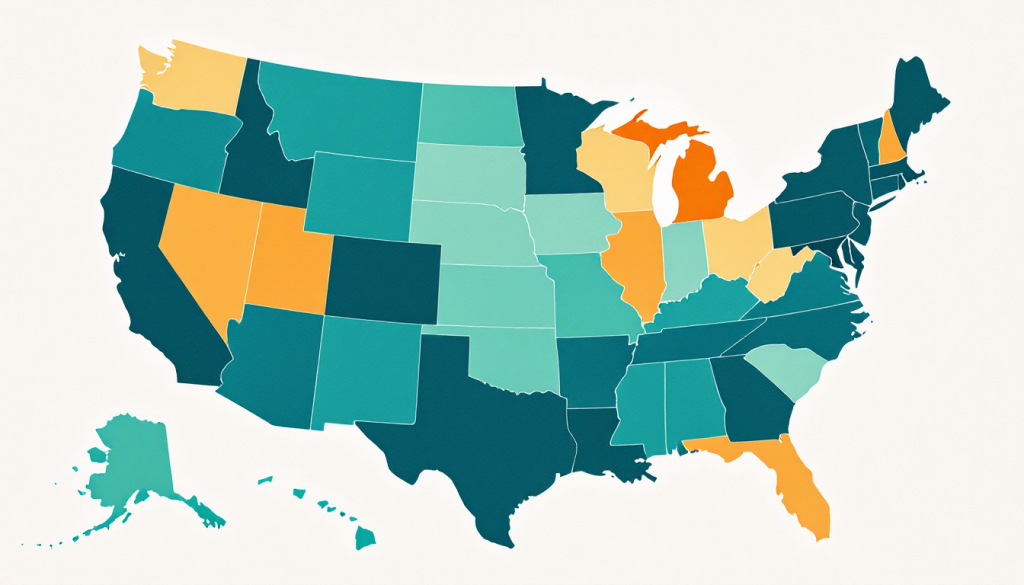
The pass-through entity tax election is the most widely adopted workaround to the federal cap on state and local tax deductions. By having a partnership or S corporation pay state income tax at the entity level, owners convert a non-deductible itemized deduction into a fully deductible business expense. More than 35 states have enacted a version of it since 2021.
Key takeaways
- The pass-through entity tax (PTET) lets a partnership or S corporation pay state income tax at the entity level, sidestepping the $10,000 federal SALT deduction cap that the Tax Cuts and Jobs Act imposed on individuals (IRC §164(b)(6)).
- The IRS blessed the structure in Notice 2020-75, confirming that an entity-level state tax is deductible by the entity and is not subject to the individual SALT cap.
- More than 35 states plus New York City had enacted a PTET regime as of early 2026 (AICPA state PTET tracker), but the rules, election deadlines, and credit mechanics differ in every one.
- The One Big Beautiful Bill Act, signed July 4, 2025, raised the individual SALT cap to $40,000 for 2025 with a phase-down for taxpayers above roughly $500,000 of modified AGI (Pub. L. 119-21), which narrows but does not eliminate the value of a PTET election for many owners.
- The election is generally annual and irrevocable for the year, with deadlines and estimated-payment rules that vary by state; a missed election or a late estimated payment can forfeit the deduction entirely.
What is the pass-through entity tax?
A pass-through entity tax is a state income tax imposed on, and paid by, a partnership or S corporation rather than on its individual owners. The owners then receive a credit (or an income exclusion) on their personal state return for the tax the entity paid on their behalf. The economic burden of the state tax does not change. What changes is who writes the check to the state, and that single change is what produces a federal deduction.
The reason this matters traces back to the Tax Cuts and Jobs Act of 2017. Before 2018, an individual who itemized could deduct state and local income and property taxes without limit. TCJA added IRC §164(b)(6), which capped the combined state and local tax deduction at $10,000 per return ($5,000 for married filing separately) for tax years 2018 through 2025. For a business owner in a high-tax state, that cap stranded tens of thousands of dollars of state tax as a non-deductible personal expense.
States responded by moving the tax off the individual return and onto the entity return. A business that pays state income tax as an ordinary and necessary expense of carrying on a trade or business deducts that tax under IRC §164(a) in computing its federal taxable income, and IRC §164(b)(6) by its terms applies only to individuals. The state tax paid by the partnership or S corporation reduces the federal income that flows through to the owners. The owners then claim a state credit so they are not taxed twice at the state level.
The open question for several years was whether the IRS would respect this. It answered in November 2020 with Notice 2020-75, which announced that proposed regulations would clarify that state and local income taxes imposed on and paid by a partnership or S corporation are deductible by the entity in computing its non-separately stated income, and are not subject to the individual SALT cap. That notice is the foundation every state PTET regime stands on.
Who is affected and who must comply
The PTET election is relevant to owners of partnerships, multi-member LLCs taxed as partnerships, and S corporations that operate in a state with both an income tax and a PTET regime. Sole proprietors, single-member LLCs that are disregarded, and C corporations are generally outside the regime, because there is no pass-through of income to an individual that the cap would otherwise limit. C corporations already deduct their state income tax at the corporate level.
Within the universe of eligible entities, the election is most valuable to owners who:
- Operate in a state with a meaningful income tax rate (the higher the state rate, the larger the federal deduction generated).
- Have state tax liability well above the federal SALT cap, even after the 2025 increase to $40,000.
- Are in the top federal bracket, where each dollar of additional federal deduction is worth up to 37 cents.
The election is not free of friction. Some states require that every eligible owner consent, or that the entity affirmatively opt in by a hard deadline. Nonresident owners, tax-exempt owners, and entities owned through tiered structures complicate the credit mechanics. An owner who is a resident of a different state may face a question of whether the home state grants a resident credit for the PTET paid to the source state, and several states answered that question slowly and inconsistently. The compliance obligation, in short, sits with the entity and its preparer, not the individual owner, and the entity must get the election and the payment right.
For owners weighing the interaction with the qualified business income deduction, the PTET reduces the income that flows to the owner, which can in turn affect the Section 199A computation. See our discussion of the Section 199A qualified business income deduction for how the two provisions interact.
How the PTET works (mechanics)
The mechanics follow a consistent four-step pattern across states, even though the details differ.
Step one, the election. The entity elects into the PTET regime for the tax year. In most states the election is annual and irrevocable once made. Some states require the election on or before the due date of the entity return; others require it much earlier, often by March 15 of the tax year itself, before the year is even over. New York, for example, requires the annual election by March 15 of the relevant tax year.
Step two, the entity computes and pays the tax. The PTET base is usually the entity’s income apportioned and allocated to the state, multiplied by a PTET rate that approximates the top individual rate. The entity pays the tax, often with quarterly estimated payments. Crucially, the payment must generally be made in the tax year to which it relates for the federal deduction to land in that year, because most pass-through entities are cash-basis for the state tax deduction. A PTET accrued but unpaid at year end may not be deductible until paid.
Step three, the federal deduction. The entity deducts the PTET it paid as a business tax under IRC §164(a) in computing the ordinary income reported on the federal Schedule K-1. Each owner’s share of pass-through income is reduced proportionally. This is the dollar of value the whole structure exists to create.
Step four, the owner’s state credit. On the owner’s personal state return, the owner reports the full pre-PTET share of state income and then claims a credit equal to the owner’s share of the PTET the entity paid. The owner is made whole at the state level and keeps the federal deduction.
A subtle point trips up many filers: the timing of the deduction versus the timing of the credit. The federal deduction is captured in the entity’s year of payment. The state credit is claimed on the owner’s return for the corresponding year. Estimated payments matter because a fourth-quarter or post-year-end payment may slip into the wrong federal year. Owners who track basis should note that the PTET deduction reduces ordinary income and therefore affects stock and debt basis for S corporation shareholders; see our guide to Form 7203 S corp basis for the basis accounting.
State-by-state PTET status and key features
More than 35 states have enacted PTET regimes, and the variations are real. The table below summarizes representative features for several of the most common states for context as of early 2026. Rates, deadlines, and thresholds change frequently, so the entity return instructions for the specific tax year govern.
| State | PTET rate (approx.) | Election deadline | Election frequency | Notable feature |
|---|---|---|---|---|
| New York | 6.85% to 10.9% graduated | March 15 of tax year | Annual | Separate NYC PTET; early-in-year deadline |
| California | 9.3% flat | June 15 prepayment required | Annual | Mandatory June 15 prepayment to qualify; sunsets after 2025 absent extension |
| New Jersey | 5.675% to 10.9% graduated (BAIT) | Due date of entity return | Annual | Branded the Business Alternative Income Tax |
| Illinois | 4.95% flat | Due date of entity return | Annual | Election on the return itself |
| Massachusetts | 5% flat | Due date of entity return | Annual | 90% of PTET credit refundable to owners |
| Connecticut | 6.99% flat | Originally mandatory, now elective | Annual | First mandatory PTET; elective from 2024 |
Two structural choices recur across states. First, whether the election is made early in the tax year or on the return. New York and California front-load the requirement, which means a December decision is too late. Second, whether the owner credit is refundable or merely creditable. Massachusetts makes 90 percent of the credit refundable, which protects owners whose other credits already zero out their liability, while many states cap the benefit at the owner’s tax due. A handful of states with no individual income tax, such as Texas, Florida, Washington, and Nevada, have no PTET because there is no individual tax to work around.
Worked example
Assume a two-owner consulting LLC taxed as a partnership, operating entirely in a state with a 6.85 percent PTET rate. The LLC has $1,000,000 of ordinary business income for 2025, split equally. Each owner is in the 37 percent federal bracket and has more than $40,000 of other state and local taxes, so the SALT cap is fully consumed before any of this business state tax.
Without the PTET election. Each owner reports $500,000 of pass-through income federally. Each owner separately owes $34,250 of state income tax on that $500,000 (6.85 percent). Because the SALT cap is already maxed out by other taxes, none of that $34,250 is federally deductible. The combined non-deductible state tax across both owners is $68,500.
With the PTET election. The LLC pays the state tax at the entity level: $1,000,000 times 6.85 percent equals $68,500 of PTET. The LLC deducts that $68,500 federally under IRC §164(a). Federal ordinary income drops from $1,000,000 to $931,500. Each owner now reports $465,750 of federal income instead of $500,000, a reduction of $34,250 each. At a 37 percent marginal rate, that saves each owner $12,672 in federal tax, or $25,345 across both owners. Each owner then claims a $34,250 state credit, so the state outcome is unchanged.
The net federal saving of roughly $25,345 per year is the entire reason these regimes exist. The state collected the same total tax; the owners simply moved where it was paid and recovered a deduction the SALT cap had taken away. Note that the saving shrinks for owners whose state liability now fits under the higher $40,000 cap, which is why the post-2025 analysis is owner-specific.
Recent changes (2025 to 2026 law changes)
The single largest change is the One Big Beautiful Bill Act, signed into law July 4, 2025 (Pub. L. 119-21). For tax years beginning in 2025, the individual SALT deduction cap rose from $10,000 to $40,000, with the cap and a related income threshold scheduled to increase modestly in following years and then revert. The Act phases the higher cap down for taxpayers with modified adjusted gross income above approximately $500,000, reducing the benefit for the highest earners back toward the $10,000 floor. Importantly, the final legislation preserved the PTET workaround; earlier draft versions had contemplated limiting PTET deductions for certain service businesses, but that limitation did not survive into the enacted law.
The practical effect is that the PTET is now most valuable to two groups: high earners whose $40,000 cap is phased down, and any owner whose state tax substantially exceeds $40,000. For an owner whose total state and local tax now fits under $40,000, the federal deduction is available without the PTET, so the election may add complexity for little gain. The arithmetic must be run per owner, per year.
Several states also adjusted their regimes. California’s PTET, enacted by AB 150 and modified by SB 113, was scheduled to apply through the 2025 tax year, and practitioners watched for an extension into 2026. Connecticut converted its originally mandatory PTET to an elective regime beginning with the 2024 tax year. Other states refined estimated-payment rules and resident-credit treatment in response to early-year confusion. Because these are state legislative changes, the controlling authority is each state’s enacted statute and its department of revenue guidance for the specific year.
Common pitfalls
- Missing an early election deadline. New York requires the annual election by March 15 of the tax year (N.Y. Tax Law Art. 24-A). A return-time decision in the following spring is far too late, and the entire deduction is lost for the year.
- Failing to make a required prepayment. California conditions PTET eligibility on a June 15 prepayment of the greater of $1,000 or 50 percent of the prior year’s PTET (Cal. Rev. & Tax. Code §19900 et seq.). Miss it and the entity cannot elect for that year.
- Paying the PTET after year end and deducting it in the wrong federal year. Most pass-through entities deduct the tax when paid. A payment made in January 2026 for the 2025 liability generally produces a 2026 federal deduction, not a 2025 deduction, under the cash-basis treatment contemplated by Notice 2020-75.
- Overlooking the resident-state credit question. An owner who is a resident of one state but earns through an entity in another may not receive a resident credit for PTET paid to the source state, risking partial double taxation. Each home state’s credit statute controls.
- Forgetting the basis adjustment. For S corporations, the PTET reduces ordinary income and therefore shareholder basis. Ignoring the adjustment on Form 7203 can produce incorrect gain or loss limitations under IRC §1366(d).
- Electing when it no longer helps. After the 2025 SALT cap increase to $40,000, an owner whose state tax fits under the cap may gain nothing from the PTET while still bearing its compliance cost.
- Assuming uniformity across states. A practitioner who applies New York’s rules to a New Jersey or Illinois entity will misstate the rate, the deadline, and the credit. Each state’s statute governs independently.
Frequently asked questions
- Does the PTET election save state taxes?
- No. It produces a federal deduction. The total state tax collected is unchanged; the owner is made whole at the state level through a credit. The benefit is federal income tax savings on the now-deductible entity-level tax.
- Did the IRS approve the PTET workaround?
- Yes. IRS Notice 2020-75 confirmed that state and local income taxes imposed on and paid by a partnership or S corporation are deductible by the entity and are not subject to the individual SALT cap under IRC §164(b)(6).
- Is the election available to a single-member LLC?
- Generally no. A single-member LLC that is disregarded reports on the owner’s individual return, so there is no entity to make the election. The owner would typically need to add a second member and be taxed as a partnership, or elect S corporation status, to access a PTET regime.
- Is the PTET election annual or permanent?
- In most states the election is annual and irrevocable for that year. The entity decides each year whether to elect, and the decision generally cannot be undone once made for the year.
- How did the One Big Beautiful Bill Act change the analysis?
- The Act, signed July 4, 2025, raised the individual SALT cap to $40,000 for 2025 with a phase-down above roughly $500,000 of modified AGI. It preserved the PTET workaround. The election remains valuable for high earners subject to the phase-down and for any owner whose state tax exceeds $40,000.
- Do C corporations use the PTET?
- No. C corporations already deduct their state income tax at the corporate level under IRC §164(a) and are not subject to the individual SALT cap. The PTET addresses only the pass-through of income to individual owners.
- What happens if a nonresident owner is involved?
- Nonresident owners complicate the credit mechanics. The entity may pay PTET on the nonresident’s apportioned share, and the nonresident’s home state may or may not grant a resident credit for the tax paid. The home state’s credit statute and any reciprocity rules control.
- When must the entity pay the PTET to get the deduction?
- Generally in the tax year to which the tax relates, because the deduction is typically claimed when the tax is paid. Quarterly estimates and a final payment before year end keep the deduction in the correct federal year.
Bottom line
The pass-through entity tax election remains the most effective tool for restoring a federal deduction that the SALT cap took away, and the IRS has expressly approved it. After the 2025 increase in the individual cap to $40,000, the election is now an owner-by-owner calculation rather than a default, and the controlling rules, deadlines, and credit mechanics live in each state’s own statute.
Sources and methodology
Primary sources: IRC §164(a) and §164(b)(6) (state and local tax deduction and the individual cap); IRS Notice 2020-75 (entity-level deductibility of partnership and S corporation state income taxes); the One Big Beautiful Bill Act, Pub. L. 119-21 (signed July 4, 2025, raising the individual SALT cap to $40,000 with phase-down); IRC §199A and §1366(d) (qualified business income deduction and basis loss limitation). State authorities: N.Y. Tax Law Article 24-A (New York PTET); Cal. Rev. & Tax. Code §19900 et seq. and AB 150 / SB 113 (California PTET); the New Jersey Business Alternative Income Tax statute; Illinois, Massachusetts, and Connecticut PTET statutes and department-of-revenue guidance. State counts and feature summaries draw on the AICPA state PTET tracker as of early 2026. State rates, deadlines, and thresholds change frequently; the entity return instructions for the specific tax year and the relevant state statute govern. For further reading see our coverage in the learn library and regulatory desk.